Disponibilitate: nedisponibila

Disponibilitate: nedisponibila
Preț: 20,10 LEI


Autor(i): Constantin Paidos
Editura: Institutul European
Anul apariției: 2005
Nr. pagini: 300 pagini
Categorii: Manuale scolare, Limba Engleza, Limbi Străine, Învățamânt - Educație
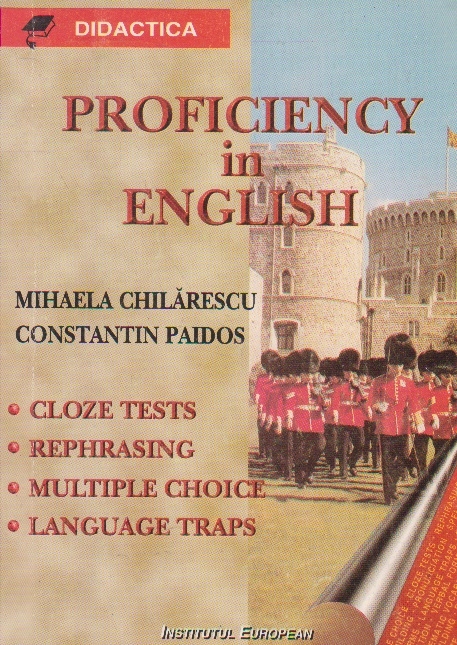
Anything one does has a WHAT, a WHY and a HOW. They ensure its credibility and its meaningfulness. This work here shall not be an exception, as far as the authors believe in its usefulness and efficiency; needless to say, both these would-be credentials are to be ''testified'' by those interested in using it. The WHAT. The book is structured on 10+1 chapters, each meant to test the capacity of high school pupils to discern between right and wrong in a wide range of sections of English, be it its grammar (2, 5, 6), vocabulary (1, 4, 7, 8), spelling and pronunciation (10), their feeling of the language when it comes to the logic of a text (3, 9), or the building up of a composition (11). The chapters, whose order reflects a certain gradation in difficulty, focus each in turn on a strictly selected type of exercise, as follows: I. Multiple Choice at the level of grammar (A), vocabulary (B), and synonymy (C) II. The Right Verbal Form checking Tense, Mood and Voice III. Cloze Exercises the most ''relative'' of all tests, due to its strictness and vastness of possibilities, and one at the same time checking all parts of speech IV. The Fitting Word when it comes to strictness, Pronouns, Adverbs, Conjunctions, and, particularly, Prepositions are the most challenging V. Language Traps a quite careful selection of the most frequent errors made by Romanian students VI. Rephrasing handling synonymous relationships that cross sentences indicates mastery of the language VII. Word Building enriching one's vocabulary by exploring word-families VIII. Thematic Vocabulary or more precisely defined areas of semantic interest IX. Reading Comprehension finding your way through the maze to the core meaning of a text X. Pronunciation and Spelling rules and exceptions, Homophones and Homographs XI. Steps in Writing a guide from sentence building to paragraph, composition and letter (formal / informal) writing. The WHY. We make no claims to originality in this book. From the very beginning a year ago it was meant to be a support, a tool, a ''pathfinder''. We have followed these objectives against a background of older, classical text-books whose status and reliability are outside the scope of this book, the format of entrance examination papers (based mainly on translations), and a foreground of national contests and other sorts of exams Soros tests, Oxford, Cambridge, Michigan, TOEFL examinations, and, indeed, part of the graduation exam paper itself. We recognised the need to offer all pupils the same chance by ensuring them access to more ways of testing so that they might become familiar with these apparently ''sophisticated'' exercises and eliminate the fear of facing the ''unknown''. We are sure that it will take time for all our pupils to afford to buy or borrow ''Made-in-England'' support materials and, without exhausting, in the least, the vast range of possibilities, we have chosen, this time, the most widely-spread types of exercises. The book undoubtedly addresses the needs of the better pupils who are interested in acquiring top performance and competence, especially when it comes to enter for exams such as those mentioned above. The HOW. Teachers we are, yet our access to sources of such exercises is limited. We do hope some of our colleagues will feel our intention is to share part of the activities we frequently do in class. The bibliography at the end of the book makes clear the vast range of information sources we have drawn upon. However, we do trust the capacity of our readers to differentiate between imitated sources and the more original, carefully-chosen items whose responsibility was the authors'. This sprang from the desire to meet and correct the most common mistakes and drawbacks we have noticed amongst our own pupils. All the exercises have been practised with chosen groups of pupils and they have worked. Although the number of these exercises is merely a drop in an endless ocean, they may be taken as an illustrative sample each of us may start from, build on and supplement for the sake of good and efficient teaching of English.
Comandă online cartea "Proficiency in english (with key to exercises)" la 20,10 lei scrisă de Constantin Paidos, tiparită la editura Institutul European în anul 2005 cu un număr de 300 pagini. cu plata ramburs sau online cu cardul. Momentan titlul "Proficiency in english (with key to exercises)" nu este disponibil însa vă puteți înscrie pentru a fi notificat în momenul reaprovizionarii.
Improve your English. Vocabulary practice
Polirom
Constantin Paidos, Cristina Dana Paidos
204 pagini
An: 2014
English Grammar. Theory and Practice (ediția a IV-a revăzută și adăugită)
Polirom
Constantin Paidos
9789734654628
520 pagini
An: 2016

Practical Course of English (contine 2 CD-uri audio)
Polirom
Mihaela Chilarescu, Constantin Paidos
9734602349
312 pagini
An: 2006
Fizica, Manual pentru clasa a VIII-a (Nichita..., Editie 1994)
Didactica si Pedagogica
Emanuel Nichita, Mircea Fronescu, Grigore Ilie
144 pagini
An: 1994
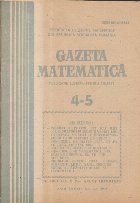
Gazeta Matematica, Nr. 4-5/1984
Gazeta Matematica
Societatea de Stiinte Matematice din Romania
80 pagini
An: 1984
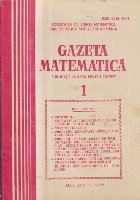
Gazeta Matematica, Nr. 1/1989
Gazeta Matematica
Societatea de Stiinte Matematice din Romania
48 pagini
An: 1989
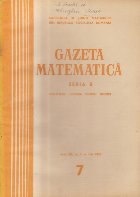
Gazeta Matematica, Nr. 7/1968
Gazeta Matematica
Societatea de Stiinte Matematice din Romania
64 pagini
An: 1968

English Business Letters / Corespondenta de afaceri in limba engleza (Miroiu)
Andreescu
Mihai Miroiu
120 pagini
An: 1992
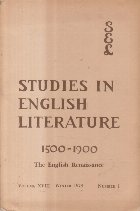
Studies in English Literature 1500-1900. The English Renaissance
William Marsh Rice University
Edward Doughtie
197 pagini
An: 1978

Literatura engleza de la inceputuri pina la 1648, Volumul I (Levitchi)
Universitatea din Bucuresti
Leon Levitchi
417 pagini
An: 1974
English Business Letters / Corespondenta de afaceri in limba engleza (Miroiu)
Andreescu
Mihai Miroiu
120 pagini
An: 1992